
How town rebuilding works in Emberville: rescue survivors, gather materials, restore districts, and watch the fog lift as the town revives.
Rebuilding Emberville: Rescue, Repair, Restore
Quick answer: Emberville town starts ruined — collapsed houses, fog, silence. You rebuild it by rescuing survivors from the Vitromotus and hauling back materials. As districts restore, the fog dissipates, sounds return, new shops and trades unlock, and the town becomes a living hub shaped by your deeds.
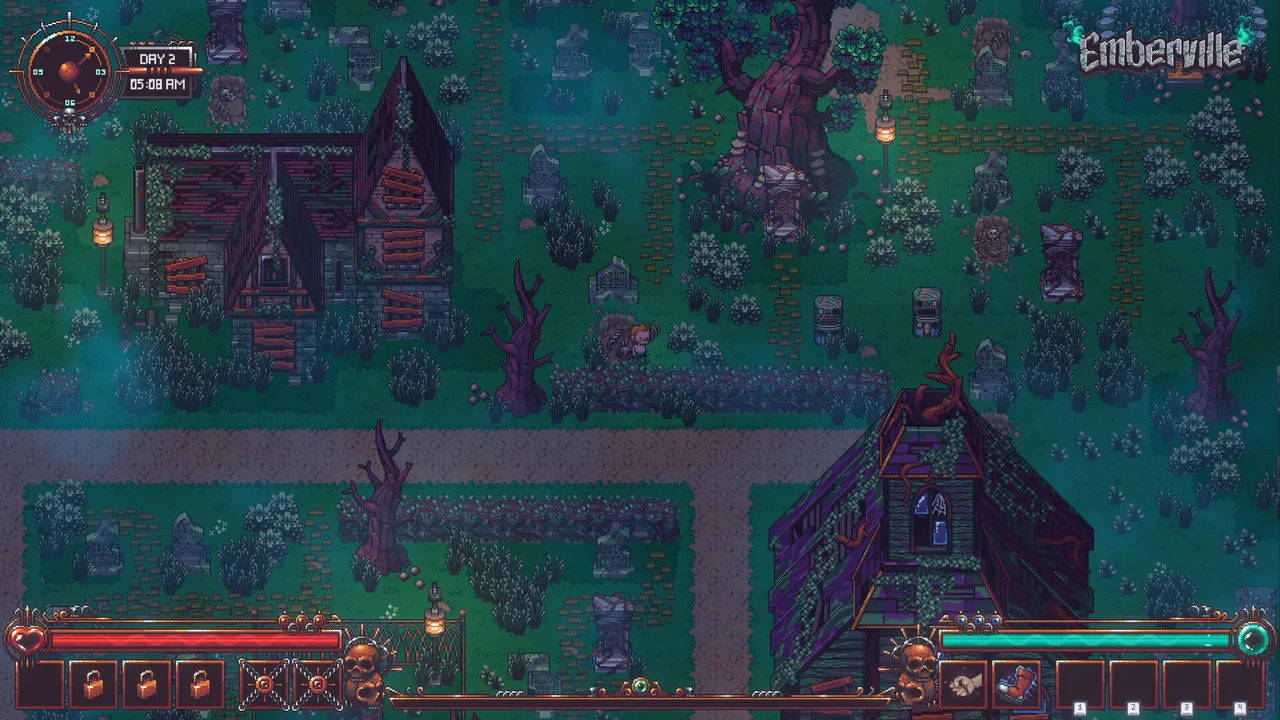
The Rebuild Loop
- Descend into the Vitromotus for materials, loot, and survivors.
- Rescue townsfolk from terrible fates — each rescue is a questline (NPC guide).
- Gather wood, stone, ore, and dungeon materials on every run.
- Restore homes, workshops, and districts back in town.
- Unlock the rescued NPC's trade, shop, or mechanic — rebuilding pays in capabilities, not cosmetics.
Official source: Emberville on Steam — "as Emberville restores itself, it will become a living hub shaped by your deeds"
Signs the Town Is Healing
CohhCarnage's early town tour describes the transformation directly: "as you start to rebuild everything, the town will start to look better. The fog will dissipate, you'll hear more sounds." Official screenshots confirm both states — the foggy day-2 square versus restored streets with lit lanterns and a working blacksmith forge.
| Stage | What you see |
|---|---|
| Ruin | Collapsed roofs, fog, empty streets, silence |
| Recovery | Repaired walls, lit braziers, returning sounds |
| Living hub | Open shops, working forge, NPC routines, decorations |
What Rebuilding Unlocks
| Unlock type | Example |
|---|---|
| Trades | Crafting professions taught by rescued NPCs |
| Shops | Gumu-style vendors for buying and selling |
| Mechanics | New systems gated behind townsfolk quests |
| Quests | Follow-up questlines from grateful residents |
| Rewards | Gear, teachings, and estate materials |
The Steam page is explicit: rescued denizens "lend their skills and help you rebuild their homes," and you "learn their trades, secrets, and dreams."
Rebuild Priorities
- Blacksmith/forge access — gear progression gates everything.
- Food and potion supply — cooking and alchemy stations.
- Tool upgrades — gathering speed compounds.
- Your estate — personal crafting independence (estate).
- Beautification — last, but the fog-lifting payoff is real.
Reading the Town's State
The two official town screenshots are a before/after pair every player should memorize. Day-2 overview: collapsed roofs, dead trees, scattered rubble, a lone heroine amid wreckage — that is your starting point. Foggy square: fountain choked in mist, lanterns lit but lonely, buildings whole but silent — recovery underway. The working forge screenshot (smith at the anvil, townsfolk nearby, streets swept) is the destination. When your town matches the third image, your infrastructure is done and remaining work is cosmetic.
Between those states, spend materials where the living hub grows: workshops before walls, stations before statues. The game rewards function-first rebuilding with more function — each restored trade unlocks the next tier of dives.
Fog, Sound, and Atmosphere as Progress Bars
Most games track rebuilding with a percentage. Emberville tracks it with weather and audio — fog density and ambient sound as diegetic progress bars. That design choice matters for how you play: no menu tells you the town is "73% rebuilt," but thinning mist over the square and new voices on the street tell you more honestly. Trust your eyes and ears; screenshot your square weekly and compare.
The Blacksmith Test (Are You Done Yet)
One image answers whether your rebuild has arrived: the working forge. A smith at the anvil, townsfolk within shouting distance, swept streets, lit lanterns — when your town matches that screenshot, gear progression is self-sustaining and remaining work is elective. Until then, every material should flow toward unlocking that scene: rescue the smith-line NPCs first, feed them ore and timber before your own projects, and treat the first hammer-strike at a restored forge as the run's real graduation. Players ask "am I ready for depth two" — the answer is the forge. Working forge, working build; silent forge, go shallower.
Material Tiers: What to Haul First
Inventory space is finite and every descent ends at the same question — what stays, what drops. Haul priority, from must-carry to leave-behind: rescue targets and keys first (progress-irreplaceable), boss materials second (gated power), metals and herbs third (forge and potion pipelines), wood and stone fourth (bulky but farmable at home), duplicate gear last (vendor it in town, keep one donor copy). When forced to choose mid-delve, drop the farmable, keep the dungeon-exclusive — wood grows at home, Matriarch chitin does not.
District by District: What Restoration Looks Like
Expect the town to restore in themed stages rather than all at once: the forge quarter first (gear gates everything), the market and food streets second (sustain and commerce), housing rows third (population and atmosphere), decorative landmarks last (fountain square in full glory). Each restored district should change daily life — new vendors with new stock, new ambient dialogue, new quest-givers appearing on previously empty porches. If a district restores without gameplay change, it is beautification; enjoy it, but do not mistake it for progress. Track restorations against the unlock table above, and you will always know whether the next material shipment should fund function or form.
FAQ
Is rebuilding optional?
No — it is half the game. Trades, mechanics, and progression systems unlock through it; pure dungeon-running starves your build.
Can buildings be customized?
A creative building area with decoration is confirmed. Exact placement rules await EA.
What does the fog actually indicate?
Recovery state rendered as weather — dense fog means early ruin, thinning mist means active restoration, clear air with lantern light means a living district. Read it as the town's health bar.
Thinning mist and returning street sounds are the town's diegetic completion meter — screenshot your square weekly and compare.
Sources
Related
More Emberville Guide Guides
All 8 Emberville crafting masteries — Alchemy to Weaponsmithing — plus how cooking works: pick an ingredient, hit start, buff for battle.
Who makes Emberville: Cygnus Cross debut studio, CohhCarnage co-creator role, and the 22-actor voice cast with Amelia Tyler and Matt Mercer.
What Emberville EA includes at launch, what 1.0 adds — modding, bosses, biomes — and how community feedback shapes the year.
Build your Emberville estate: workbenches, furnaces, farms, decorations, and why your homestead drives dungeon progress.
Every confirmed Emberville answer in one place: release date, co-op, price, platforms, classes, permadeath, demo, and system specs.
How farming works in Emberville: crop plots, Herbalism and Farming masteries, and turning harvests into food for dungeon dives.
Fishing, Mining, Smelting, and Woodcutting in Emberville: how gathering masteries level and feed your crafting and kitchen.
How Emberville gear works: dungeon loot, forging weapons and armor, potions, food, tools, and trinkets — all pre-launch confirmed.