
How Emberville gear works: dungeon loot, forging weapons and armor, potions, food, tools, and trinkets — all pre-launch confirmed.
Emberville Weapons and Gear: Find, Forge, Upgrade
Quick answer: Emberville gear comes from three directions: loot it in the Vitromotus, forge it from gathered materials, or earn it from rescued villagers. Weapons and armor improve through leveling, items, and villager help — then weapon-bound combos and mastery bonuses multiply their power.
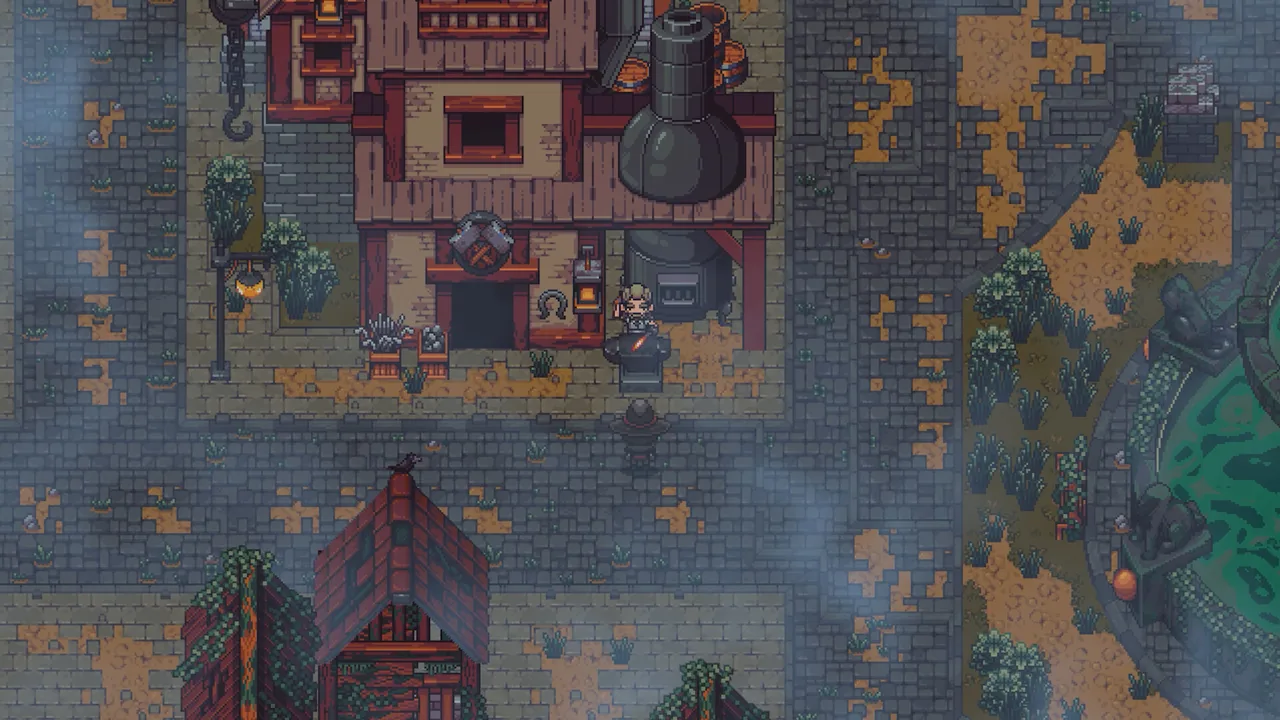
Where Gear Comes From
| Source | What you get |
|---|---|
| Dungeon loot | Weapons, armor, and trinkets from enemies, chests, and breakables |
| Forging/crafting | Weapons (Weaponsmithing), armor (Armorsmithing/Leatherworking/Tailoring), tools |
| Villagers | Quest rewards, teachings, and "amazing rewards" for rescues |
| Consumables | Potions (Alchemy), food (Cooking) for battle sustain |
Official source: Emberville on Steam — "gather a myriad of unique materials to forge not only your combat equipment, but also useful potions, food, tools, and trinkets"
How Gear Improves
The Steam page lists three upgrade paths: leveling, items, and the help of villagers you rescue. Concretely that means:
- Use-based mastery — weapons and armor level as you fight in them, unlocking combos and bonuses (weapons, armor).
- Crafted tiers — forge better base pieces as your masteries and materials improve (crafting).
- NPC teachings — rescued townsfolk improve your equipment and skills directly.
Item rarities, affix pools, and upgrade-stage numbers have not been revealed. "Common to legendary" style breakdowns published pre-launch are speculation. We will publish the real itemization tables from the EA build.
Gear Slots (Confirmed and Inferred)
| Slot | Evidence |
|---|---|
| Weapons | Confirmed — swords, bows, staves plus unrevealed types |
| Four armor slots | Confirmed — each with its own mastery |
| Trinkets | Confirmed as craftable (Jewelcrafting) |
| Tools | Confirmed — gathering implements |
| Consumables | Food + potions for battle |
Loot Tips for Launch
- Break everything — prologue furniture drops wood, coal, weapons, and armor.
- Match gear to attributes — heavy weapons want Strength, bows want Dexterity, staves want Intelligence (stats).
- Keep a donor set — leveling spare weapons unlocks classes and combos while your main carries fights.
- Trinkets are the sleeper slot — Jewelcrafting is easily ignored; do not ignore free stats.
The Forge Priority Order
When metals are scarce (always, early), spend in this order and you will never regret it:
- Main weapon tier — damage gates every wall in the game.
- Chest armor — the largest defensive slot by tradition; confirm at EA.
- Tools — gathering speed pays back across the whole save.
- Off slots and trinkets — efficient once the big three are set.
- Cosmetic/furniture forging — estate beauty after power.
Rescued villagers improve gear directly, so time forge sessions after rescue questlines that promise equipment rewards — free upgrades beat paid ones.
What "Upgrade" Likely Means at Launch
Three channels, three verbs: level (use-mastery on equipped pieces), forge (craft strictly-better base pieces), teach (NPC improvements to existing gear). The exact currency of the third channel — gold? materials? quest completion? — is the biggest open itemization question. Our launch-week priority is documenting it, because it decides whether you hoard or spend.
Consumable Economics: Food vs Potions
Both sustain you, but they spend different resources — plan accordingly:
| Factor | Food (Cooking) | Potions (Alchemy) |
|---|---|---|
| Raw source | Farm crops, fish, gathered ingredients | Dungeon herbs, drops |
| Production site | Kitchen/campfire, batch-friendly | Alchemy station, batch-friendly |
| Best use | Pre-fight buffing plus steady sustain | Emergency recovery mid-fight |
| Mastery cost | Cooking XP per meal | Alchemy XP per brew |
| Failure mode | Entering bosses unfed | Entering deep dives unstocked |
The optimal loadout carries both: eat before the boss door for baseline sustain, save potions for moments when adds overwhelm or patterns surprise you. Never vendor surplus harvests raw — a cooked meal is worth multiples of its ingredients in dungeon survival, and Cooking mastery climbs with every batch.
Tools: The Force Multiplier Nobody Showcases
No trailer spotlights the pickaxe, but tools quietly multiply every economy in the game: faster gathering means more materials per dive-hour, which means more forge tiers, more cooked batches, more mastered tracks. Craft tool upgrades the moment materials allow, prioritize the tools matching your bottleneck (pick for ore-hungry smiths, axe for timber-hungry builders), and replace them on schedule rather than sentimentally — a worn tool taxes every swing. Tools are confirmed craftables with an upgrade path; treat them as gear, not accessories, and they will pay for your entire mid-game.
How do I know a tool needs replacing?
Watch gathering speed per swing and compare against freshly crafted baselines — when yields dip or break rates climb, reforge. Tools tax every action they touch, so a stale pick quietly bleeds more value in an hour than its replacement costs. Replace on schedule, not on breakage.
FAQ
Can I upgrade a favorite weapon to endgame?
The forge-and-leveling structure suggests keeping pieces relevant, but exact upgrade mechanics and caps are unconfirmed.
Is there trading or multiplayer loot?
No — single-player only, so all loot is yours.
What is the single biggest forge mistake?
Upgrading everything a little instead of one thing a lot. A single max-tier main weapon with unlocked combos out-damages three half-tier weapons combined, and the dungeon's walls check peak damage, not average wealth. Funnel first, diversify later.
Should I keep quest-reward gear?
Yes — at least one copy. Reward gear often carries unique flavor or unlock flags that random drops lack, and vendors pay little for what quests paid story to deliver. Bank it, display it, or wear it; just do not vendor it blind.
Sources
Related
More Emberville Guide Guides
Who makes Emberville: Cygnus Cross debut studio, CohhCarnage co-creator role, and the 22-actor voice cast with Amelia Tyler and Matt Mercer.
What Emberville EA includes at launch, what 1.0 adds — modding, bosses, biomes — and how community feedback shapes the year.
Build your Emberville estate: workbenches, furnaces, farms, decorations, and why your homestead drives dungeon progress.
Every confirmed Emberville answer in one place: release date, co-op, price, platforms, classes, permadeath, demo, and system specs.
How farming works in Emberville: crop plots, Herbalism and Farming masteries, and turning harvests into food for dungeon dives.
Fishing, Mining, Smelting, and Woodcutting in Emberville: how gathering masteries level and feed your crafting and kitchen.
The Knight is Emberville's defensive melee class: Raise Shield, Counter Attack, block scaling, and how to build around it.
Kymia is Emberville's emotion-born magic: it resurrects the dead, reshaped the prison into biomes, and fuels your Kymia Points.