
Fishing, Mining, Smelting, and Woodcutting in Emberville: how gathering masteries level and feed your crafting and kitchen.
Emberville Fishing and Gathering: Ponds to Mines
Quick answer: Beyond the farm, Emberville rewards working its waters and wilds: Fishing at ponds and docks, Mining and Smelting for forge metals, and Woodcutting for timber. All four are use-leveled masteries, and every gather feeds crafting, cooking, or building.
Where to Gather
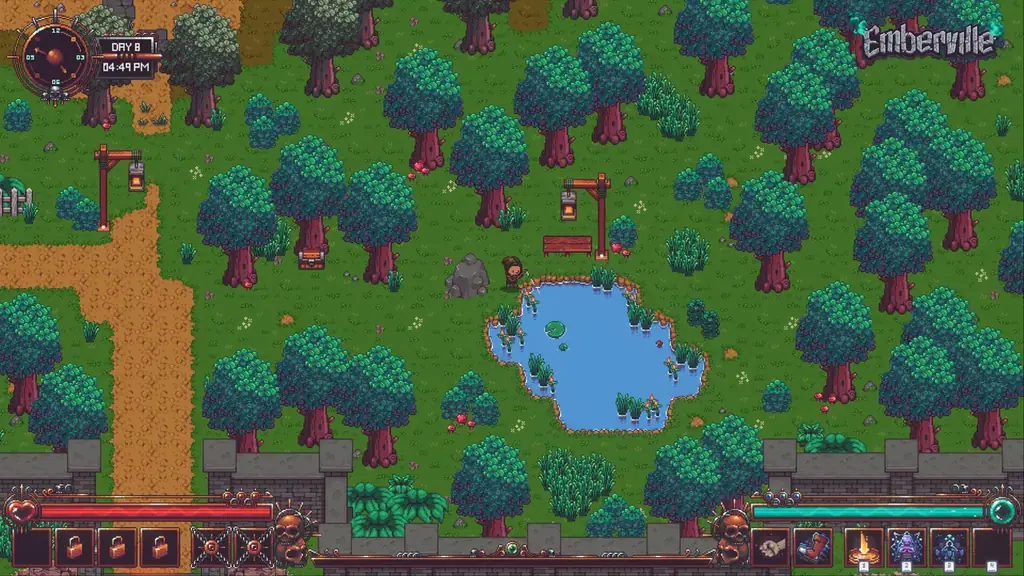
Official screenshots map the gathering landscape: a forest pond ringed by trees (fishing water), a river dock by the estate camp, woodland for timber, and dungeon veins for ore. The town itself is a farming tutorial zone — previewers call gathering masteries the easiest to max through repetitive town tasks.
| Activity | Where | Feeds |
|---|---|---|
| Fishing | Ponds, rivers, estate dock | Cooking ingredients |
| Mining | Dungeon veins, town outskirts | Smelting → forge metals |
| Smelting | Furnaces (windmill farmstead rows) | Weaponsmithing, Armorsmithing |
| Woodcutting | Forests, estate grounds | Carpentry, buildings, fuel |
| Herbalism | Wilds, dungeon edges | Alchemy, Cooking |
How Gathering Masteries Level
Identical rule to combat: do the thing, level the thing. Chop, catch, mine, and smelt to grow each mastery. No rank-bonus details are public yet, but the structure mirrors weapon masteries — expect per-rank perks documented at launch.
Official source: Mobalytics — Emberville leveling and stats
Gathering Route for New Players
- Wood first — estate building and tool crafting both thirst for timber.
- Fish between dives — the pond is safe, quiet XP while crops grow.
- Mine on every descent — dungeon veins turn dive time into forge metals.
- Smelt in batches — furnace rows at the farmstead suggest bulk processing beats one-offs.
The estate camp screenshot includes a river dock — fishing infrastructure at home base. Prioritize unlocking it; home-water fishing with zero travel time is the ideal loop filler.
The Pond Reader's Guide (From Screenshots)
The forest-pond screenshot rewards study: still water ringed by dense trees, wooden posts suggesting a dock or jetty, open banks for casting room, and deep visual calm — the game telegraphs safety here. Contrast the river dock at the estate camp (working waterfront, barrels, direct home access) with the wild pond (remote, scenic, presumably richer catches). That two-water structure implies a classic split: home water for steady basics, wild water for rare species or gathering events. Unlock the estate dock first for zero-travel fishing, then pilgrimage to wild ponds when your gear (and patience) allows. Watch for day-clock effects — dawn/dusk bites are genre tradition, unconfirmed but worth testing on day one.
Mining Veins: Dungeon Income
Ore is the only gathering resource found primarily underground, which makes every descent a mining run whether you plan it or not. Veins appear in ruins and lab biomes (stone-rich walls are the tell), and mined ore feeds Smelting directly — the shortest pipeline in the game from rock to sword. Carry a pick-equivalent tool always (tools are confirmed craftables), prioritize veins near your path over detours into uncleared rooms, and remember mined weight against inventory pressure: ore is heavy value, so bank it at settlements rather than hauling full loads through boss doors. The miners' rule holds — never walk past a vein on the way down; you will want that bar on the way back up.
Herbalism Routes: The Potion Supply Chain
Wild herbs are Alchemy's first mile, and dungeon edges plus town outskirts are the confirmed picking grounds. Sweep them on every route — herbs weigh little, stack well, and convert into the potions that save deep dives. Pair herbalism with fishing loops (pond banks grow herbs in every game of this type) and with return legs (picked clean on the way down, regrown on the way back if respawns tick). If the EA build allows herb beds at the estate, plant them immediately: a home herb garden converts the potion economy from foraged to farmed, and farmed economies scale while foraged ones cap.
Smelting: The Bottleneck Skill
Of the six gathering masteries, Smelting is the odd one — it processes rather than collects, and its furnaces appear in rows at the farmstead, built for batches. Expect the forge economy to hinge on it: Mining without Smelting is a rock collection. New players should treat the first furnace as a bigger milestone than the first steel sword, because every metal tier in Weaponsmithing and Armorsmithing queues behind smelted bars. Mine on every descent, smelt on every return, and never let furnaces sit cold.
Woodcutting: The First-Day Priority
Timber feeds Carpentry (estate buildings, furniture), tool handles, and likely furnace fuel. The estate grounds and surrounding forest are day-one lumber — clear modestly, replant if the game allows, and remember Woodcutting levels by swing like everything else. The riverside camp practically demonstrates the starter kit: workbench plus trees plus water equals self-sufficiency within the first hour.
FAQ
Is fishing a mini-game?
Unconfirmed. Cooking was simplified to "select and start," so gathering interactions may follow the same accessible philosophy — or fishing may be the skill-based exception. Awaiting EA.
What fish exist?
No fish species, rarities, or records have been revealed. We will catalog them from the live build.
Can I gather inside the dungeon?
Yes — mining veins and herbs appear in dungeon biomes, which is why every descent doubles as a gathering run. Bring tools alongside weapons; the dungeon pays miners.
Should I sell raw materials or craft first?
Craft first, always. Raw wood and ore vendor for fractions of their forged value, and gathering mastery only climbs through use — selling raw skips both the profit and the XP.
Sources
Related
More Emberville Guide Guides
Who makes Emberville: Cygnus Cross debut studio, CohhCarnage co-creator role, and the 22-actor voice cast with Amelia Tyler and Matt Mercer.
What Emberville EA includes at launch, what 1.0 adds — modding, bosses, biomes — and how community feedback shapes the year.
Build your Emberville estate: workbenches, furnaces, farms, decorations, and why your homestead drives dungeon progress.
Every confirmed Emberville answer in one place: release date, co-op, price, platforms, classes, permadeath, demo, and system specs.
How farming works in Emberville: crop plots, Herbalism and Farming masteries, and turning harvests into food for dungeon dives.
How Emberville gear works: dungeon loot, forging weapons and armor, potions, food, tools, and trinkets — all pre-launch confirmed.
The Knight is Emberville's defensive melee class: Raise Shield, Counter Attack, block scaling, and how to build around it.
Kymia is Emberville's emotion-born magic: it resurrects the dead, reshaped the prison into biomes, and fuels your Kymia Points.