
All 8 Emberville crafting masteries — Alchemy to Weaponsmithing — plus how cooking works: pick an ingredient, hit start, buff for battle.
Emberville Crafting and Cooking Guide
Quick answer: Emberville has eight crafting masteries — Alchemy, Armorsmithing, Carpentry, Cooking, Jewelcrafting, Leatherworking, Tailoring, Weaponsmithing — each leveling as you craft. Cooking is the simplest: select an ingredient, hit start, and carry food into battle alongside potions.
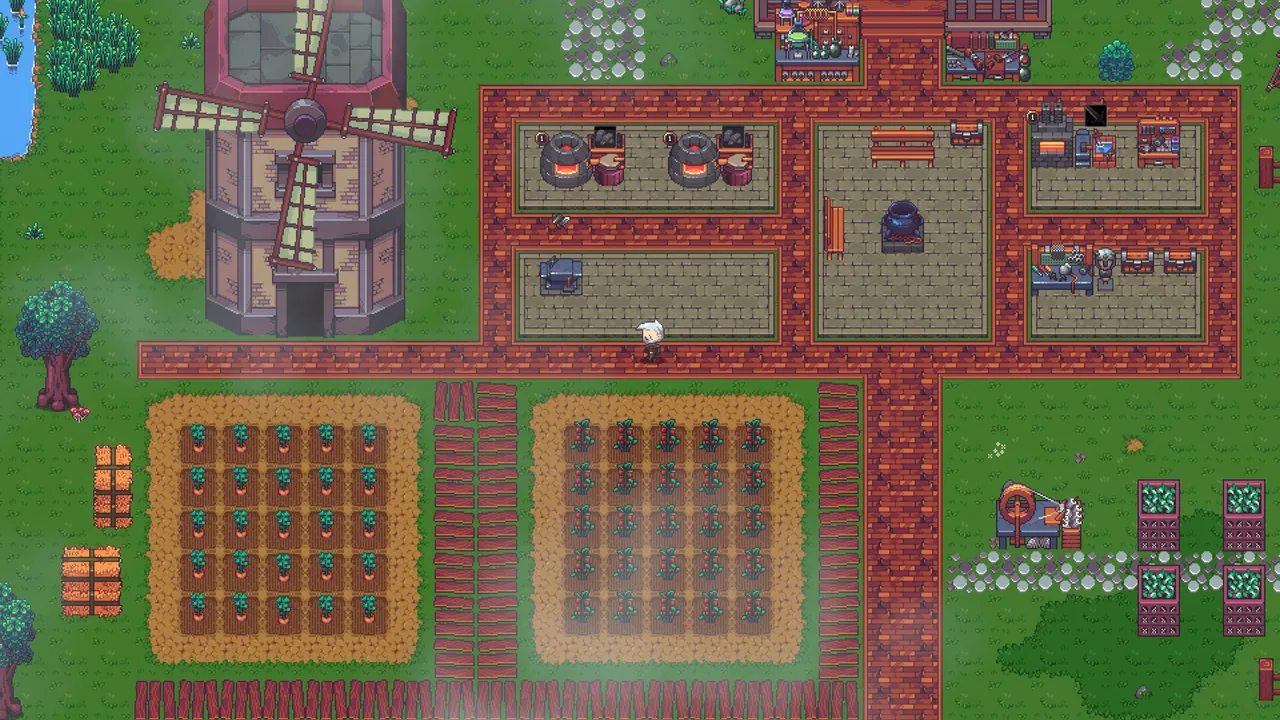
The Eight Crafting Masteries
| Mastery | Produces |
|---|---|
| Alchemy | Potions and battle consumables |
| Armorsmithing | Metal armor |
| Carpentry | Buildings, furniture, estate structures |
| Cooking | Food with battle benefits |
| Jewelcrafting | Trinkets and accessories |
| Leatherworking | Light/leather gear |
| Tailoring | Cloth gear |
| Weaponsmithing | Weapons |
Each mastery levels by crafting volume — "craft a certain amount of resources… before you can progress." Bonuses per mastery rank are not yet public.
Official source: Mobalytics — Emberville leveling and stats
How Cooking Works
COGconnected's preview tried it directly: cooking is "as simple as selecting the ingredient and hitting start." No mini-game confirmed, no complex recipe chains revealed — pick what you gathered or farmed, cook it, and bring it into the dungeon. Food and potions are the two consumable pillars of hard fights.
Official source: COGconnected Emberville preview
Specific recipes, ingredients, and food buff numbers have not been revealed. Any site publishing an "all recipes" table before launch is guessing. This page will carry the real list once the EA build is datamined or officially documented.
What to Craft First
- Tools — gathering speed compounds into everything else.
- Food — the cheapest survivability for the Spider Matriarch.
- Potions — alchemy covers emergencies food cannot.
- Your weapon/armor tier — then buildings and furniture for the estate.
Crafting stations live at your estate and in town workshops — rescue the right NPCs to unlock them (NPC rescue).
Crafting and the Town Loop
The Steam page ties it together: "gather a myriad of unique materials to forge not only your combat equipment, but also useful potions, food, tools, and trinkets." Dungeon materials feed town crafting, which feeds deeper dives — the loop from our beginner guide.
Leveling Crafting Masteries: The Honest Grind
"These will require you to craft a certain amount of resources… before you can progress" — Mobalytics describing all eight masteries. No shortcuts confirmed, so plan production batches:
| Mastery | Leveling fuel | Tip |
|---|---|---|
| Cooking | Farm harvests | Cook every harvest; never vendor raw food |
| Alchemy | Dungeon herbs, drops | Brew between dives, not during |
| Weaponsmithing | Mined ore, smelted bars | One trainee weapon per tier, no more |
| Armorsmithing | Same metals | Armor is four slots — batch accordingly |
| Carpentry | Timber | Estate projects double as XP |
| Leatherworking | Dungeon hides | Feed your Light-armor users first |
| Tailoring | Cloth drops | Likely caster gear; confirm at EA |
| Jewelcrafting | Gems, rare drops | Save rares; trinkets are slot-efficient power |
Because gathering masteries are "the easiest to max" via town repetition, the intended flow is clear: gather on autopilot in town, craft in batches at the estate, and let all fourteen mastery tracks climb together in the background of your dungeon progression.
Alchemy Spotlight: The Potion Pipeline
Alchemy deserves its own planning because potions are the only sustain that works mid-fight when food timing fails. Herbs come from Herbalism gathering and dungeon drops; brewing happens at the alchemy station in batches between dives. Stocking rule: carry enough for the worst fight you expect plus one emergency — running dry mid-descent forces retreats that waste more time than brewing ever costs. As mastery levels, watch for batch-size or potency perks (unconfirmed, but the genre-standard reward); when they appear, re-brew your entire stock to the new tier rather than mixing old and new. A fresh potion tier is effectively a free defensive upgrade for every build you own.
Carpentry, Tailoring, Leatherworking: The Quiet Three
Weaponsmithing and Alchemy steal attention, but the quiet three decide comfort. Carpentry builds the estate itself — every workbench, bed, fence, and storage upgrade runs through timber, making it the first mastery to feel (housing) and the last to finish (beautification). Tailoring and Leatherworking split the armor pipeline by weight class, which means your build chooses your craft: Knight-mains feed Armorsmithing, kiters feed Leatherworking, casters feed Tailoring. The efficient household levels the craft matching its main first, then the others as donor XP — mirroring the class-donor strategy exactly, because the whole game runs on one philosophy: depth first, breadth second.
Jewelcrafting and Trinkets: The Quiet Power Slot
Trinkets are the only gear type with no mastery-gated class attached and no obvious farm — which is precisely why players sleep on Jewelcrafting while chasing weapons. Do not. A trinket slot is stat budget without opportunity cost: no weapon to level, no armor category to commit, just gems converted into passives. Save every rare drop for the jeweler's bench instead of vending it, and treat your first crafted trinket as a bigger milestone than your third weapon tier. When the EA build reveals trinket affixes, this section becomes a best-in-slot list; until then, remember the slot exists and feed it.
FAQ
Where do I unlock recipes?
Unconfirmed. Likely via NPC teachings, quest rewards, and experimentation — we will document the real sources at launch.
Does crafting have skill trees?
Yes — "each crafting mechanic also has its own levelling and skill trees," per COGconnected. Your character develops based on how you play.
Sources
Related
More Emberville Guide Guides
What Emberville EA includes at launch, what 1.0 adds — modding, bosses, biomes — and how community feedback shapes the year.
Build your Emberville estate: workbenches, furnaces, farms, decorations, and why your homestead drives dungeon progress.
Every confirmed Emberville answer in one place: release date, co-op, price, platforms, classes, permadeath, demo, and system specs.
How farming works in Emberville: crop plots, Herbalism and Farming masteries, and turning harvests into food for dungeon dives.
Fishing, Mining, Smelting, and Woodcutting in Emberville: how gathering masteries level and feed your crafting and kitchen.
How Emberville gear works: dungeon loot, forging weapons and armor, potions, food, tools, and trinkets — all pre-launch confirmed.
The Knight is Emberville's defensive melee class: Raise Shield, Counter Attack, block scaling, and how to build around it.
Kymia is Emberville's emotion-born magic: it resurrects the dead, reshaped the prison into biomes, and fuels your Kymia Points.